

 BTCL1$87,450.00▲ +2.45%
 ETHL1$2,310.00▲ +1.82%
 SOLL1$142.50▲ +4.15%
 BNBL1$612.00▲ +0.95%
 XRPL1$2.15▼ -1.20%
 DOGEMeme$0.175▲ +3.80%
 ADAL1$0.620▲ +1.10%
 AVAXL1$24.80▼ -0.80%
 SUIL1$2.85▲ +5.40%
 LINKDeFi$13.90▲ +1.60%
 PEPEMeme$0.000008▼ -2.30%
 NEARL1$3.95▲ +2.10%
 TRXL1$0.165▲ +0.40%
 TONL1$4.85▼ -0.50%
 WIFMeme$1.72▲ +4.90%
 FETAI$0.780▲ +3.20%
 RENDERDeFi$5.20▲ +1.40%
 AAVEDeFi$145.00▲ +2.80%
 DOTL1$4.90▼ -1.10%
 UNIDeFi$8.20▲ +1.90%
 SHIBMeme$0.000014▲ +1.20%
 APTL1$6.20▼ -0.90%
 HYPEL1$28.50▲ +4.20% BTCL1$87,450.00▲ +2.45% ETHL1$2,310.00▲ +1.82% SOLL1$142.50▲ +4.15% BNBL1$612.00▲ +0.95% XRPL1$2.15▼ -1.20% DOGEMeme$0.175▲ +3.80% ADAL1$0.620▲ +1.10% AVAXL1$24.80▼ -0.80% SUIL1$2.85▲ +5.40% LINKDeFi$13.90▲ +1.60% PEPEMeme$0.000008▼ -2.30% NEARL1$3.95▲ +2.10% TRXL1$0.165▲ +0.40% TONL1$4.85▼ -0.50% WIFMeme$1.72▲ +4.90% FETAI$0.780▲ +3.20% RENDERDeFi$5.20▲ +1.40% AAVEDeFi$145.00▲ +2.80% DOTL1$4.90▼ -1.10% UNIDeFi$8.20▲ +1.90% SHIBMeme$0.000014▲ +1.20% APTL1$6.20▼ -0.90% HYPEL1$28.50▲ +4.20%
Distribución de interés abierto y cuota de mercado por exchange
6 plataformas registradas# | Exchange de derivados | Interés abierto (USD) | Cuota de mercado | Cambio 24h |
|---|---|---|---|---|
| #1 |  CMEFuturos perpetuos y tradicionales | $8.81B | 16.55% | ▲ +0.58% |
| #2 |  BinanceFuturos perpetuos y tradicionales | $10.93B | 20.53% | ▲ +0.66% |
| #3 |  OKXFuturos perpetuos y tradicionales | $3.60B | 6.75% | ▲ +1.40% |
| #4 |  BybitFuturos perpetuos y tradicionales | $6.22B | 11.68% | ▲ +0.54% |
| #5 |  KuCoinFuturos perpetuos y tradicionales | $865.96M | 1.62% | ▼ 1.77% |
| #6 |  GateFuturos perpetuos y tradicionales | $4.75B | 8.92% | ▲ +0.02% |
BinanceOKXBybitKuCoin MEXC
 Bitfinex
 Kraken
 HTX
Inteligencia de microestructura de liquidaciones
Seguimiento en tiempo real de liquidaciones forzadas, concentraciones de stops y flujo de órdenes tóxico en Binance, OKX, Bybit y Deribit.
Liquidaciones históricas acumuladas en múltiples exchanges para Bitcoin (BTC). Liquidaciones forzadas de longs frente a shorts con precio de marca.
Correlación macroestructural de doble eje entre el precio spot de Bitcoin y las cascadas de liquidación totales.
BinanceLargo liquidadoBinanceLargo liquidadoBybitLargo liquidadoBinanceLargo liquidadoBinanceLargo liquidadoGateLargo liquidadoOKXLargo liquidadoGateCorto liquidadoTabla de líderes de fondos ETF spot de Bitcoin en EE. UU.
10 fondos registrados# | Fondo y emisor | Precio por acción | % 24H | Reservas y cuota de BTC | Flujo neto 24h |
|---|---|---|---|---|---|
| #1 | IBIT | $43.36 | ▼ 5.14% | 814.87K BTC / $66.17B | ▲ +$111,700,000 |
| #2 | FBTC | $66.71 | ▼ 5.01% | 176.51K BTC / $14.92B | ▲ +$227,000,000 |
| #3 | GBTC | $59.12 | ▼ 5.12% | 125.25K BTC / $10.11B | ▼ -$95,100,000 |
| #4 | BITB | $41.57 | ▼ 5.13% | 36.87K BTC / $2.82B | ▲ +$237,900,000 |
| #5 | ARKB | $25.43 | ▼ 4.93% | 30.69K BTC / $2.48B | ▲ +$65,300,000 |
| #6 | HODL | $21.66 | ▼ 5.12% | 14.38K BTC / $1.12B | ▲ +$10,600,000 |
| #7 | BRRR | $21.61 | ▼ 5.03% | 5.66K BTC / $472.12M | ▲ +$29,400,000 |
| #8 | EZBC | $44.26 | ▼ 5.06% | 5.64K BTC / $439.39M | ▲ +$50,100,000 |
| #9 | BTCO | $76.21 | ▼ 5.09% | 5.16K BTC / $421.78M | ▲ +$17,400,000 |
| #10 | BTCW | $81.06 | ▼ 4.87% | 2.06K BTC / $167.76M | ▲ +$1,000,000 |
Acciones representativas del mercado (tesorerías corporativas, exchanges, mineros) y rendimiento móvil del precio spot de Bitcoin frente al índice de referencia en USD.
Acciones correlacionadas y tesorerías públicas
5 proxies institucionalesMatriz de rendimientos spot de Bitcoin (BTC)
Noticias y télex de mercado de BTC
Binance opens crypto withdrawals in phases starting with bitcoin following $6.3 billion hack
Binance reopens customer withdrawals following a record $6.3 billion exploit. Bitcoin leads the first phase.

This Altcoin Defies Sunday Sluggishness as BTC Eyes $78K Recovery: Weekend Watch
Meanwhile, M and XPL have dropped hard over the past 24 hours.

‘Uptober’ Flopped as BTC Tanked 7%: Will November Be Any Different?
The ETF outflows and the Binance hack were among the reasons behind BTC's price decline.
Binance Begins Reopening Withdrawals With Bitcoin After $6.3 Billion Hack
The exchange says it has replenished about 95% of the impacted amount, with less-liquid tokens accounting for the remaining 5%.
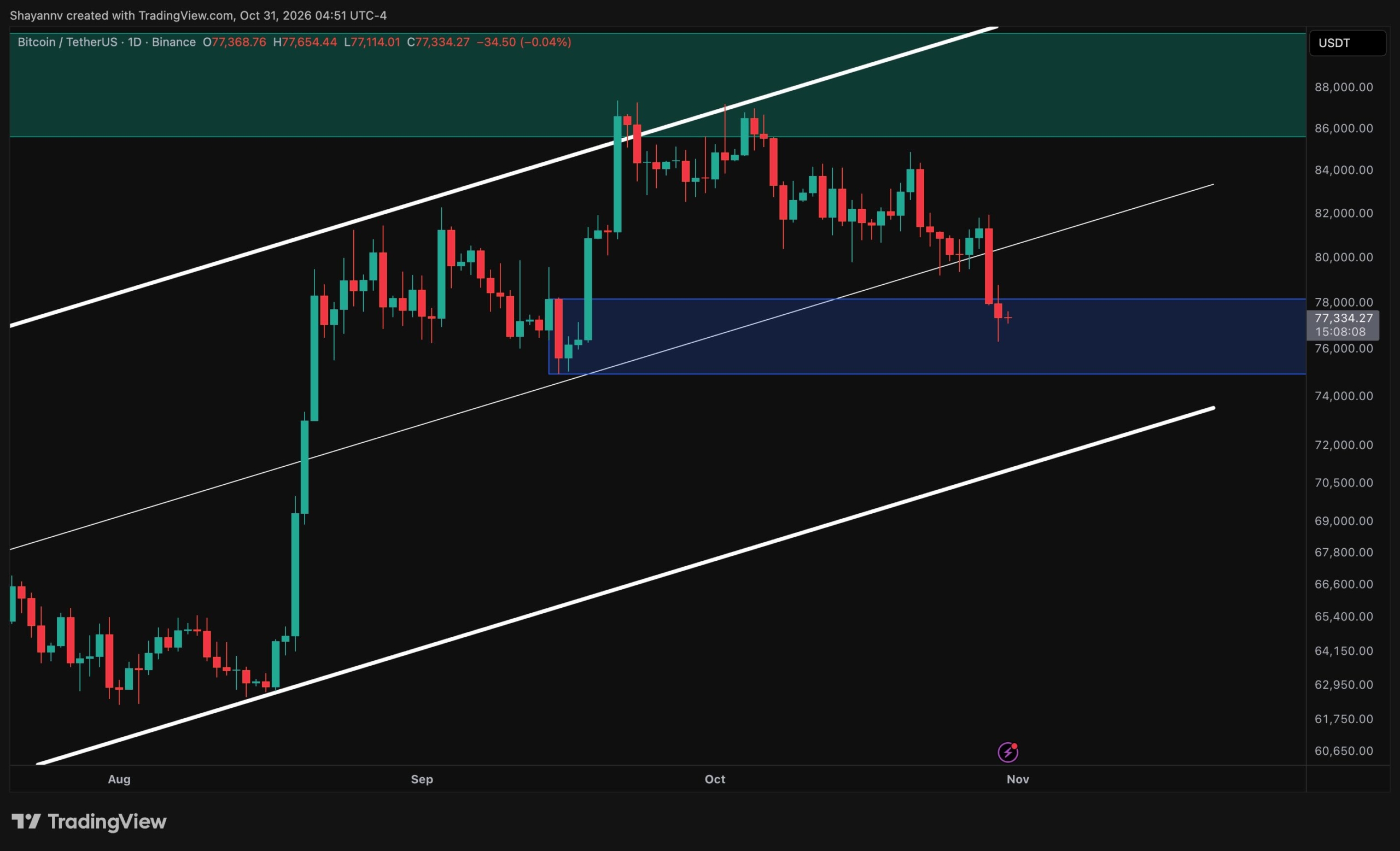
Bitcoin Price Prediction for the Week: Will BTC Reclaim $80K or Dump Toward $70K?
Bitcoin’s decline has accelerated into the $77K region after buyers lost the $80K support area. The price is now testing a major daily demand zone, while on-chain data shows it approaching the average...
Bitcoin to $1.6 Million? Bitwise Raises 2036 Price Target Despite Brutal Market Downturn
Bitwise sees Bitcoin reaching $1.6 million by 2036, even as gold attracts most store-of-value investment and ETF inflows slow.

FBI confirms North Korea's role in $6 billion Binance hack, asks DeFi community to block BTC, ETH, SOL addresses
While the FBI listed hundreds of addresses in its notice, Chainalysis said the Binance attackers have already used "thousands addresses," and expects this number to continue growing.

Bitcoin's white paper turns 18, and small businesses are still paying for the bailouts it answered
Eighteen years after Satoshi published the Bitcoin white paper, business owners are still covering the cost of a system built on bailouts, and they can protect part of their surplus by keeping it in b...

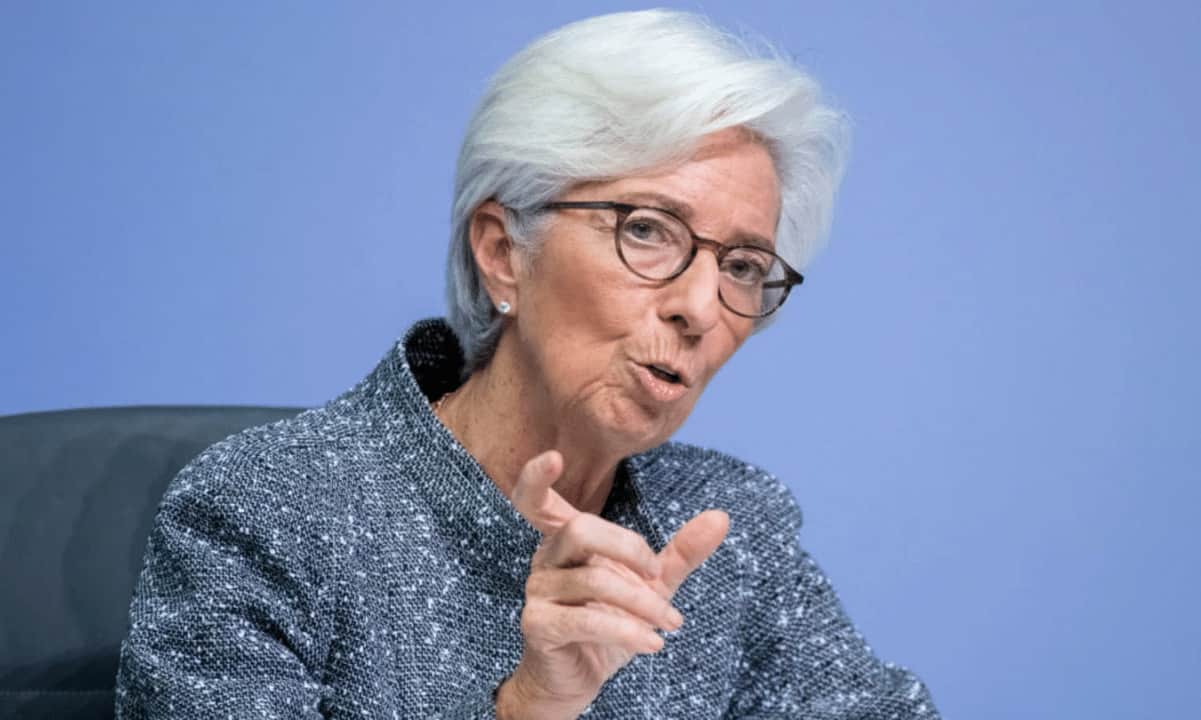
Christine Lagarde Is Leaving the ECB: Here’s What She Really Thought About Bitcoin
From calling BTC highly speculative to ruling it out of central-bank reserves, her position on the asset remained consistently negative.
b14g Says 97 Million CORE Drained, Pauses Contracts
The Bitcoin staking protocol says exchanges froze about 9 million CORE and that staked BTC was unaffected.

Binance Confirms 7,499 BTC SAFU Transfer After Hack
The exchange says it has replenished 90% of the amount lost and pledges to rebuild its emergency fund to about $1 billion.
Bitcoin held up better than expected after Binance hack, Strive CEO says
Strive CEO Matt Cole says the Binance hack has not changed his long-term case for Bitcoin, but cautions it is too early to call a market bottom.
Here’s what happened in crypto today
Need to know what happened in crypto today? Here is the latest news on daily trends and events impacting Bitcoin price, blockchain, DeFi, Web3 and crypto regulation.

Bitcoin turns 18: Has the original rebel grown up?
In typical Bitcoin style, the number one cryptocurrency turns 18 today, amid AI-driven security threats, quantum fears and the biggest exchange hack in crypto history.

As big bitcoin miners chase AI profits, individuals get another shot at the rewards
Several companies offer access to bitcoin mining without the hassle of running equipment, but high costs and the 2028 reward halving make profits uncertain.

Acerca de Bitcoin
Bitcoin (BTC) es un activo digital descentralizado líder. Basado en consenso criptográfico, impulsa la liquidación segura entre pares, contratos de derivados de alta liquidez y transacciones financieras sin permisos a nivel global.
Herramientas cuantitativas gratuitas para calcular umbrales de liquidación, requisitos de apalancamiento y exposición al riesgo para BTC.
Bitcoin Calculadora de precio de liquidación
Calcula los precios exactos de activación de quiebra y liquidación para posiciones con margen aislado o cruzado.
Bitcoin Requisitos de apalancamiento y margen
Determina los ratios de margen inicial y de mantenimiento según los niveles de Binance, OKX y Bybit.
Bitcoin Estimador de costos y tasa de financiación
Calcula pagos de financiación cada 8h, rendimiento anualizado de carry y costo por comisiones en largos/cortos.
Bitcoin Dimensionamiento de posición y matriz de riesgo
Calcula el tamaño óptimo de contrato según el saldo de cuenta, el delta del stop-loss y el % de riesgo máximo.
Bitcoin Calculadora de PnL y ROI de futuros
Modela escenarios de objetivos de ganancias, comisiones de trading, deslizamiento taker y rentabilidad neta del capital.
Explora inteligencia avanzada de microestructura, exposición gamma (GEX) y flujo de órdenes multiexchange.
Mapa de liquidaciones de Bitcoin
Inspecciona niveles de precios multiexchange y densidad de liquidación de largos/cortos.
Mapa de calor de liquidaciones de Bitcoin
Monitorea la acumulación histórica de liquidez, migraciones de huella y vaciado de fondos de liquidez.
Academia de trading cuantitativo y centro GEX
Domina la exposición gamma de los creadores de mercado, barreras de cobertura delta y regímenes de volatilidad.
Glosario de microestructura y VPIN
Comprende la probabilidad de toxicidad sincronizada por volumen y el desequilibrio del libro de órdenes.
Todo lo que necesitas saber sobre liquidaciones, Open Interest y métricas cuantitativas de BTC.
Las liquidaciones de Bitcoin ocurren cuando los traders apalancados no pueden mantener los requisitos de margen inicial en contratos de futuros y perpetuos. Cuando el precio se mueve en contra de su posición, el exchange ejecuta automáticamente una orden de liquidación a mercado para evitar saldos negativos, desatando fuertes cascadas de volatilidad.
Criptomonedas populares de Capa 1 y DeFi monitoreadas en los mapas de calor de liquidez de Kingfisher.