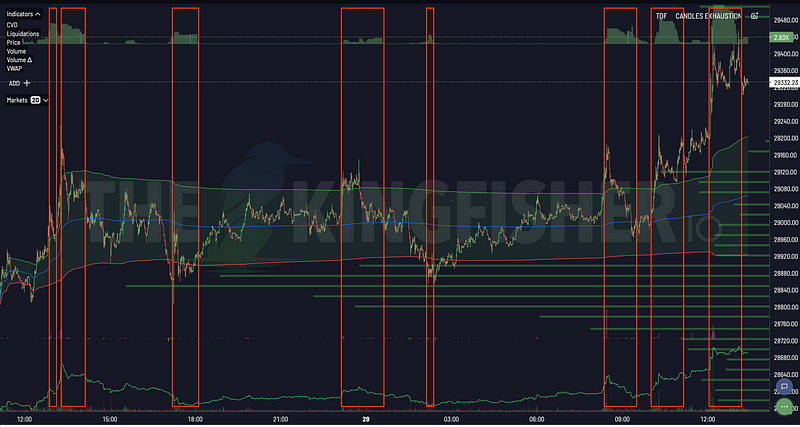


Introduction: Swing Trading Cryptocurrency for Consistent Profits
Swing trading captures multi-day price movements, balancing the intensity of day trading with the patience of long-term investing. Traders using Kingfisher's institutional-grade data can frame swing setups by combining liquidation map analysis with GEX+ dealer positioning.
What you'll learn: Kingfisher Success Stories: How Traders Actually Use the Data walks through this in more detail.
- Swing trading timeframes and holding periods
- Multi-timeframe analysis techniques
- Liquidation cluster swing setups
- GEX+ trend confirmation
- Risk management for swing trades
- 2026 market-specific swing strategies
Understanding Swing Trading
The Sweet Spot Between Day Trading and Investing
What is Swing Trading?
Definition:
- Holding positions for 2-10 days
- Capturing multi-day price swings
- Not tied to charts all day
- Positioning for multi-day moves rather than intraday ticks
- Typically a handful of trades per month
Advantages:
- Less stressful than day trading
- More time for analysis
- Catches larger moves
- Lower transaction costs
- Fits around other commitments
Disadvantages:
- Overnight risk (gap risk)
- Requires patience
- Larger stops needed
- Fewer opportunities than day trading
- Can miss intraday reversals
Ideal Holding Periods
Short-Term Swings (2-4 days):
- Captures quick corrections in trends
- Lower risk per trade
- More frequent opportunities
- Requires active monitoring
Medium-Term Swings (5-7 days):
- Optimal balance of risk/reward
- Captures full multi-day moves
- Manageable overnight risk
- Best for most traders
Long-Term Swings (8-14 days):
- Catches larger trend moves
- Higher profit potential
- Higher overnight risk
- Requires wider stops
Core Swing Trading Strategy
Liquidation Cluster Swing Trading
Strategy Framework
Setup Identification:
- Daily liquidation map analysis
- Identify major cluster zones
- Verify with GEX+ positioning
- Check OI trend alignment
- Confirm funding rate not extreme
- Multi-timeframe agreement (4H, Daily, Weekly)
Entry Rules:
- Pullback to major liquidation cluster
- GEX+ shows support/resistance at cluster
- OI trend supports directional bias
- Price respect of cluster (bounces/rejects)
- Volume spike on rejection
Exit Rules:
- Target: Next liquidation cluster level
- Time-based exit: 5-7 days max
- Trailing stop after 3R profit
- Partial profits at intermediate levels
Example Long Swing Trade
Illustrative setup (Bitcoin, hypothetical levels, not a current forecast):
- Price: $92,000
- Major liquidation cluster at $90,500: (long liquidations)
- GEX+ turning positive at support
- OI increasing with price
- Funding: +0.01% (neutral bullish)
- Daily trend: Uptrend intact
Trade:
- Entry: $91,000 (pullback to cluster)
- Stop: $89,500 (below cluster)
- Target 1: $94,500 (next resistance cluster)
- Target 2: $96,000 (weekly resistance)
- Risk/Reward: 1:3.5
Management:
- Hold 5 days
- Price hits $94,500 (day 3): Take 50% profit
- Move stop to breakeven
- Remaining hits $96,000 (day 5): Exit
- Total profit: 2.75R
Multi-Timeframe Analysis
Aligning Timeframes for Swing Success
Timeframe Hierarchy
Weekly (Trend Direction):
- Identify overall trend
- Major support/resistance zones
- Long-term liquidation clusters
- Macro bias (bullish/bearish)
Daily (Setup Identification):
- Swing entry zones
- Liquidation cluster targets
- GEX+ weekly levels
- OI trend confirmation
4-Hour (Entry Timing):
- Precise entry points
- Intraday pullbacks
- Minor cluster levels
- Entry trigger confirmation
Analysis Process
Step 1: Weekly Analysis
- Trend: Uptrend/Downtrend/Range
- Major liquidation clusters (weekly)
- Long-term GEX+ levels
- Key support/resistance zones
Step 2: Daily Setup Hunt
- Pullback to weekly cluster?
- Daily cluster forming?
- GEX+ alignment?
- OI supporting the move?
Step 3: 4H Entry Timing The market analysis entry breaks the mechanics down further.
- Price approaching daily cluster
- 4H pullback complete?
- Volume spike confirmation?
- Enter on 4H trigger
GEX+ for Swing Trading
Dealer Positioning Over Multi-Day Periods
Why GEX+ Matters for Swings
Institutional Flows:
- Dealers hedge large options positions
- Hedging shapes multi-day price action
- Dealer positioning can create price "magnets"
- Reading GEX+ helps anticipate multi-day hedging flows
Swing Trading Applications:
- Positive GEX+ at support: dips tend to be absorbed, so long setups can be held through the multi-day window when the regime holds
- Negative GEX+ at resistance: rallies tend to be sold, so short setups can be held through the multi-day window when the regime holds
- GEX+ flip: a trend change becomes more likely, treat it as a scenario to confirm rather than a signal to act on
- Cluster + GEX+ alignment: a higher-conviction swing scenario, still subject to invalidation
GEX+ Swing Framework
Positive GEX+ Environment:
- Dealers long gamma
- Dips tend to be bought and rips sold
- Range-bound with upward bias
- Strategy: Long setups framed on pullbacks to clusters, held 3-5 days while the regime holds
Negative GEX+ Environment:
- Dealers short gamma
- Rallies tend to be sold and dips bought
- Range-bound with downward bias
- Strategy: Short setups framed on rallies to clusters, held 3-5 days while the regime holds
Transitioning GEX+:
- GEX+ flipping positive to negative: a trend top becomes more likely, but it is a scenario to confirm, not a fact
- GEX+ flipping negative to positive: a trend bottom becomes more likely, again a scenario to confirm
- Position sizing and invalidation should be set before the flip, not after
OI and Funding Trends
Confirming Swing Direction
Open Interest Analysis
OI Trend Confirmation:
- Rising OI + Rising Price = Strong uptrend (hold longs)
- Rising OI + Falling Price = Strong downtrend (hold shorts)
- Falling OI + Rising Price = Weak uptrend (take profits soon)
- Falling OI + Falling Price = Weak downtrend (cover shorts)
OI Divergence Warning:
- Price makes new high, OI doesn't: bearish divergence
- Price makes new low, OI doesn't: bullish divergence
- Divergences have often preceded swing reversals; a confirmed divergence is a scenario to reassess, not a mechanical signal
- Treat a confirmed divergence as a prompt to review the thesis, not as an automatic instruction to exit or reverse
Funding Rate Analysis
Funding for Swing Context:
- Moderate funding (+/-0.01%): Normal conditions, swing trade OK
- High funding (>0.03%): Overcrowded longs, avoid long swings
- Negative funding (<-0.03%): Overcrowded shorts, avoid short swings
- Funding flip: Sentiment shift, swing trade opportunity
Strategy:
- Check funding before swing entry
- Avoid entering at funding extremes
- Use funding reversals as swing entry signals
- Monitor funding changes during swing (early warning)
Risk Management
Protecting Swing Capital
Position Sizing
Risk Per Swing Trade:
- Maximum 1-2% of account per trade
- Adjust based on confidence (3+ signals = 2%)
- Higher volatility = smaller position
- Wider stops = smaller position
Stop Loss Placement:
- Beyond liquidation clusters
- Below/above key support/resistance
- Maximum risk: 1.5R (wider than day trading)
- Trail stops as price moves favorably
Portfolio Management
Swing Portfolio Rules:
- Maximum 3 concurrent swing positions
- Correlated pairs count as single position
- Keep total portfolio risk under 6%
- Scale into swing positions (50% initially)
- Take partial profits at targets
Overnight Risk Management:
- Accept gap risk (part of swing trading)
- Size positions to survive overnight gaps
- Set stop orders (understand gap risk)
- Don't leverage excessively for swings
Entry and Exit Techniques
Executing Swing Trades
Entry Techniques
Limit Entry at Cluster:
- Set limit orders at liquidation clusters
- Patient approach (wait for fill)
- Better risk/reward than market entries
- Multi-entry scaling (50% initially)
Pullback Entry:
- Wait for pullback to cluster zone
- Enter on 4H reversal signal
- Confirm with volume spike
- Higher probability than chasing
Breakout Entry:
- Enter on break of cluster resistance
- Confirm with volume and OI
- Higher risk, higher reward
- Use partial entries (25% initially)
Exit Techniques
Target-Based Exit:
- Primary target: Next liquidation cluster
- Secondary target: Weekly resistance/support
- Take 50% at first target
- Trail stop on remainder
Time-Based Exit:
- Maximum holding period: 7-10 days
- If target not hit by day 7, exit 50%
- Exit by day 10
- Prevents capital tying in stagnant trades
Trailing Stop:
- After 3R profit: Move stop to breakeven
- After 5R profit: Trail at 2R below current price
- Protect profits while allowing runners
- Don't trail too tightly (give swing room)
Common Mistakes to Avoid
Swing Trading Pitfalls
Mistake 1: Impatient Entries
Problem:
- Entering before price reaches cluster
- Chasing moves
- FOMO entries
- Poor risk/reward
Solution:
- Wait for pullback to cluster
- Set limit orders and be patient
- Accept missing some trades
- Only enter at optimal levels
Mistake 2: Ignoring the Trend
Problem:
- Swing trading against major trend
- Fighting weekly direction
- Low probability trades
- Frustrating results
Solution:
- Trade with the weekly trend
- Counter-trend swings only at extreme levels
- Use multi-timeframe analysis
- Respect macro bias
Mistake 3: Poor Exit Management
Problem:
- Holding too long past target
- Not taking partial profits
- Letting winners turn to losers
- No exit plan
Solution:
- Pre-define exit targets
- Take partial profits at clusters
- Time-based exits for stagnant trades
- Exit when original thesis invalidates
Mistake 4: Overleveraging Swings
Problem:
- Using excessive leverage on multi-day holds
- Not respecting overnight volatility
- Liquidation risk from swings
- Emotional stress from leverage
Solution:
- Lower leverage for swings (2x max)
- Size positions for overnight gaps
- Focus on percentage gains, not leverage
- Swing trading = patience, not leverage
2026 Market Considerations
Adapting to Current Market
Institutional Dominance
Impact on Swings:
- More efficient price discovery
- Smaller swing ranges (sometimes)
- Faster mean reversion
- Need for institutional data (Kingfisher)
- Algorithms dominate multi-day flows
Adaptation:
- Use liquidation maps (see institutional footprints)
- Monitor GEX+ for dealer positioning
- Watch for faster swing completions than in prior regimes
- Trade with institutional flows, not against
Market Structure Changes
2026 Considerations:
- ETF flows create larger swings
- Stablecoin regulations affect liquidity
- Macro correlations stronger
- Regulatory news creates swing opportunities
Strategy Adjustments:
- Monitor ETF flow data
- Track regulatory calendar
- Consider equity market correlations
- Trade volatility events (news catalysts)
Building Your Swing System
Complete Framework
Daily Swing Routine
Pre-Market (30 minutes):
- Review overnight price action
- Check Kingfisher liquidation maps
- Identify swing setup zones
- Note any news/events
- Set limit orders at clusters
End-of-Day (15 minutes):
- Review all open swing positions
- Update trailing stops if needed
- Identify new swing setups for tomorrow
- Calculate day's P&L
- Plan adjustments
Weekly Review (30 minutes)
Weekly Routine:
- Review all swing trades from past week
- Document what worked/what didn't
- Calculate weekly P&L
- Identify best setups for coming week
- Adjust strategy if needed
Related Articles
- Crypto Day Trading Strategies 2026
- Liquidation Maps: See Where Bitcoin Will Bounce or Break Through
- GEX+: Gamma Exposure Guide for Crypto Traders
- Open Interest Explained: What OI Tells You About Crypto Market Trends
FAQ
Q: What's the ideal holding period for crypto swing trades? A: 3-10 days is the sweet spot for most swing setups in crypto markets. Shorter than 3 days and you're day trading with wider stops (suboptimal risk/reward). Longer than 10 days and you're exposed to overnight gap risk, funding cost bleed, and regime changes that can invalidate your thesis overnight. Set hard time-based exits: take 50% profit if target isn't hit by day 7, exit remaining position entirely by day 10 regardless of P&L. Stagnant swing positions tie up capital that could be working in better setups.
Q: How much leverage should I use for swing trading vs day trading? A: Significantly less. Day trades might justify 5x-10x leverage with active monitoring. Swing trades held 3-10 days through overnight sessions, weekends, and potential news events should use 2x maximum. At 5x leverage on a swing position, a single overnight gap of 4% (common around FOMC or macro events) costs you 20% of your margin. Size swing positions to survive the worst overnight move in the past 30 days, not the average one. Most profitable swing traders run 1x-2x and let their edge compound over dozens of trades rather than amplifying individual ones.
Q: How does GEX+ help specifically with swing trade timing? A: GEX+ is arguably MORE valuable for swings than for day trades because dealer positioning plays out over multi-day timeframes. When GEX shows strongly positive gamma across your target zone, dealers tend to buy dips there for as long as the regime holds, which can support a swing position held over several days. When GEX flips negative above your target, expect dealers to amplify upward moves (if you're long), or treat the flip zone as mechanical resistance to plan around, not a certainty. Check the GEX+ regime before entering any swing trade expected to last 3+ days; if the regime doesn't support your holding period, shorten the timeline or wait for alignment.
Q: Should I swing trade altcoins or stick to BTC and ETH? A: Start with BTC and ETH for swing trading. They have the deepest liquidity, most reliable LiqMap clusters, and cleanest OI/funding signals. Altcoin swings offer higher percentage gains but also higher correlation risk (when BTC dumps 10%, your carefully researched alt swing drops 20% regardless of its individual thesis). Once you're consistently profitable swinging BTC/ETH over 3+ months, allocate 20-30% of swing capital to top-5 alts (SOL, AVAX, LINK) with proven LiqMap depth. Keep alt swing risk per trade at 0.5-1% max (half your BTC/ETH sizing).
Q: How many swing trades should I aim for per week? A: Quality over quantity: 2-4 well-selected swing setups per week is a reasonable working pace for most traders. More than that and standards can slip to fill slots. Fewer than that and you may be too selective or missing valid setups. Disciplined swing traders often take only 1-2 trades per week, but each one is built on 3+ confirming signals (LiqMap cluster + GEX alignment + OI trend + funding confirmation + multi-timeframe agreement). One well-constructed swing trade beats five mediocre ones every time.
Conclusion
Mastering Swing Trading with Kingfisher
Swing trading captures the sweet spot between active day trading and passive investing. With Kingfisher:
Key Advantages:
- Daily Liquidation Maps, Identify swing levels
- GEX+, Confirm dealer positioning
- OI Analysis, Trend strength confirmation
- Funding Rates, Sentiment context
- Multi-Timeframe Tools, Complete picture
Building Consistency:
- Start with 2-3 swing setups per week
- Master liquidation cluster entries
- Use multi-signal confirmation
- Risk management is non-negotiable
- Patience is your edge
Swing trading in 2026 requires institutional-grade data. Kingfisher provides retail traders with professional-grade tools for structured swing analysis.
Start with Kingfisher, Current plans in-app, Explore Features
Resources: